Reverse Engineering Candidates
This page is a supplemental addendum to the Webasto pilot dossier. It does not change the main recommendation, which remains an artifact-first battery and thermal change-pack review. It captures the useful part of the new reverse-engineering source without repeating or distorting the core Webasto story.
Critical Caveat
The reverse-engineering source itself makes an important point: it does not find public evidence that Webasto sells packaging machines. Its value is therefore narrower than the main Webasto dossier.
Use this addendum as:
- a generic packaging-machine component library for demo construction
- a backup set of CAD-rich parts if we need visually obvious diff and release-check examples
- internal guidance for future packaging-company demos
Do not use it to replace the core Webasto positioning around battery, thermal, JT, 3D PDF, and release-pack workflows.
What This Addendum Adds
- a shortlist of packaging-machine parts that are rich in revision logic
- strong candidates for visual diff and release-readiness storytelling
- a clear boundary between "useful demo assets" and "customer-evidence-backed Webasto fit"
Best Generic Packaging Candidates
| Priority | Candidate part | Why it is useful | Best RapidDraft story |
|---|---|---|---|
| 1 | Lug-chain carton pocket side plate | Instant visual diff and a very easy jam or scuffing story. | pocket width, dowel, and datum changes |
| 2 | Vacuum manifold block for suction head | Feature-rich machined part with ports, grooves, and sealing surfaces. | threaded-port changes plus flatness and surface-finish checks |
| 3 | Product inserter pusher sled | Alignment-critical and mechanically dense without being hard to explain. | moved holes, added dowels, and thickness changes |
| 4 | Flap tucker arm | Strong closure-quality story and believable fatigue or backlash-driven revisions. | tolerance tightening, bushing addition, and arm-length changes |
| 5 | Hot-melt nozzle mounting bracket with heat shield | Good sheet-metal plus process-alignment example. | slot-range changes, bend-note gaps, and nozzle offset drift |
| 6 | Adjustable carton magazine side guide plate | Simple but realistic changeover part that accumulates revision noise. | slot-length changes, bend specs, and ambiguous adjustment intent |
Geometry Snapshots
These are compact visual summaries of the six best generic packaging candidates from the reverse-engineering source. They are included here so a reader can picture the parts without opening the .docx.
1. Lug-chain carton pocket side plate
Generated assets
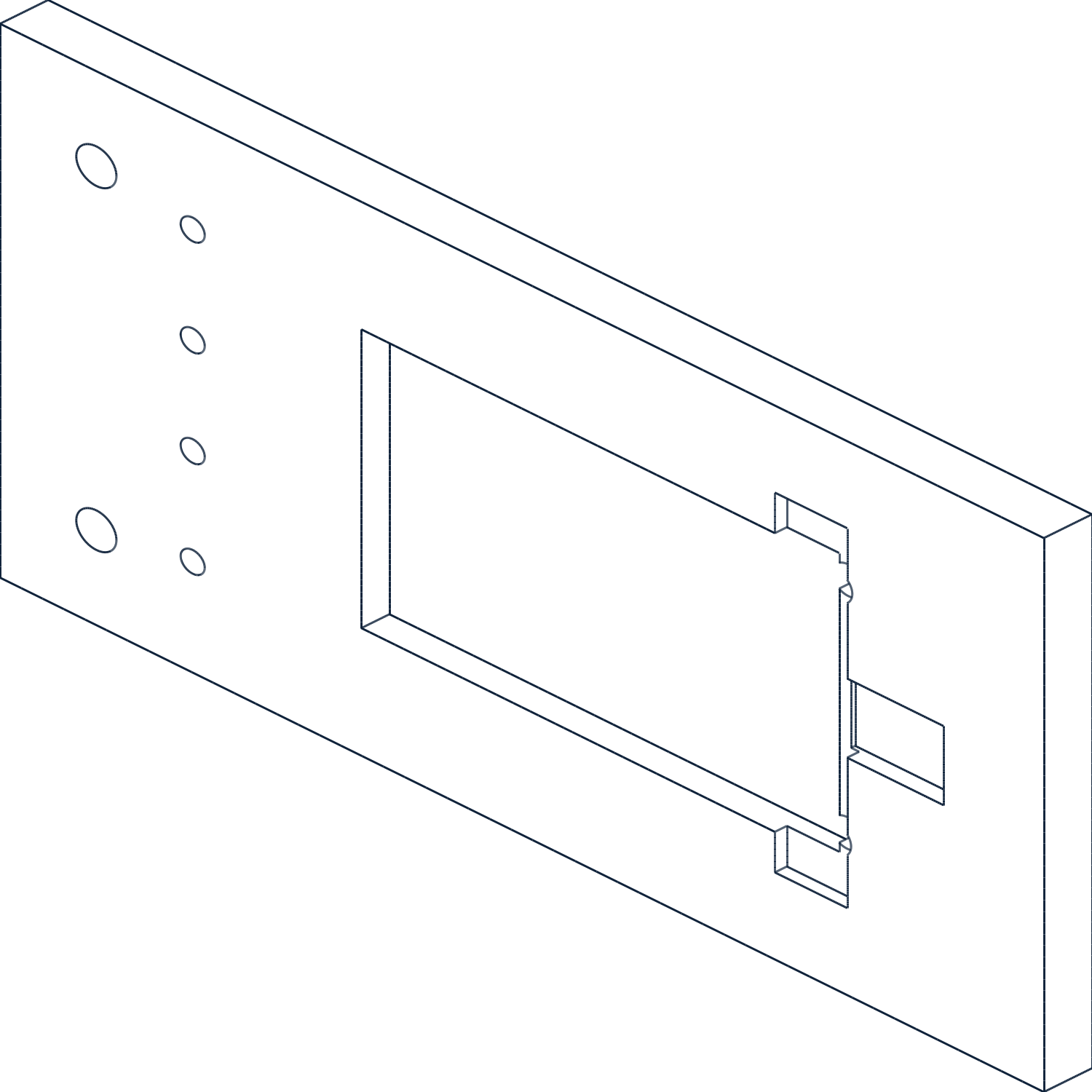
STEP: Rev A, Rev BDrawing stubs: Rev A PDF, Rev B PDFGeneration inputs: Rev A prompt, Rev B prompt, Rev A script, Rev B scriptManifest: artifact_manifest.json
Shape: machined side plate with a carton pocket profile cut into itKey features: pocket contour, wear-strip mounting, lug attachment pattern, dowel holes for repeatability, counterbores, radiused internal cornersApproximate size:260 x 140 x 12 mmLikely material:Al 7075-T6or anodized6082, optionally withUHMWwear insertsTypical revision: widen the pocket by about1.5 mm, shift a dowel hole by0.3 mm, and add an entry chamfer or relief pocket
2. Vacuum manifold block for suction head
Generated assets
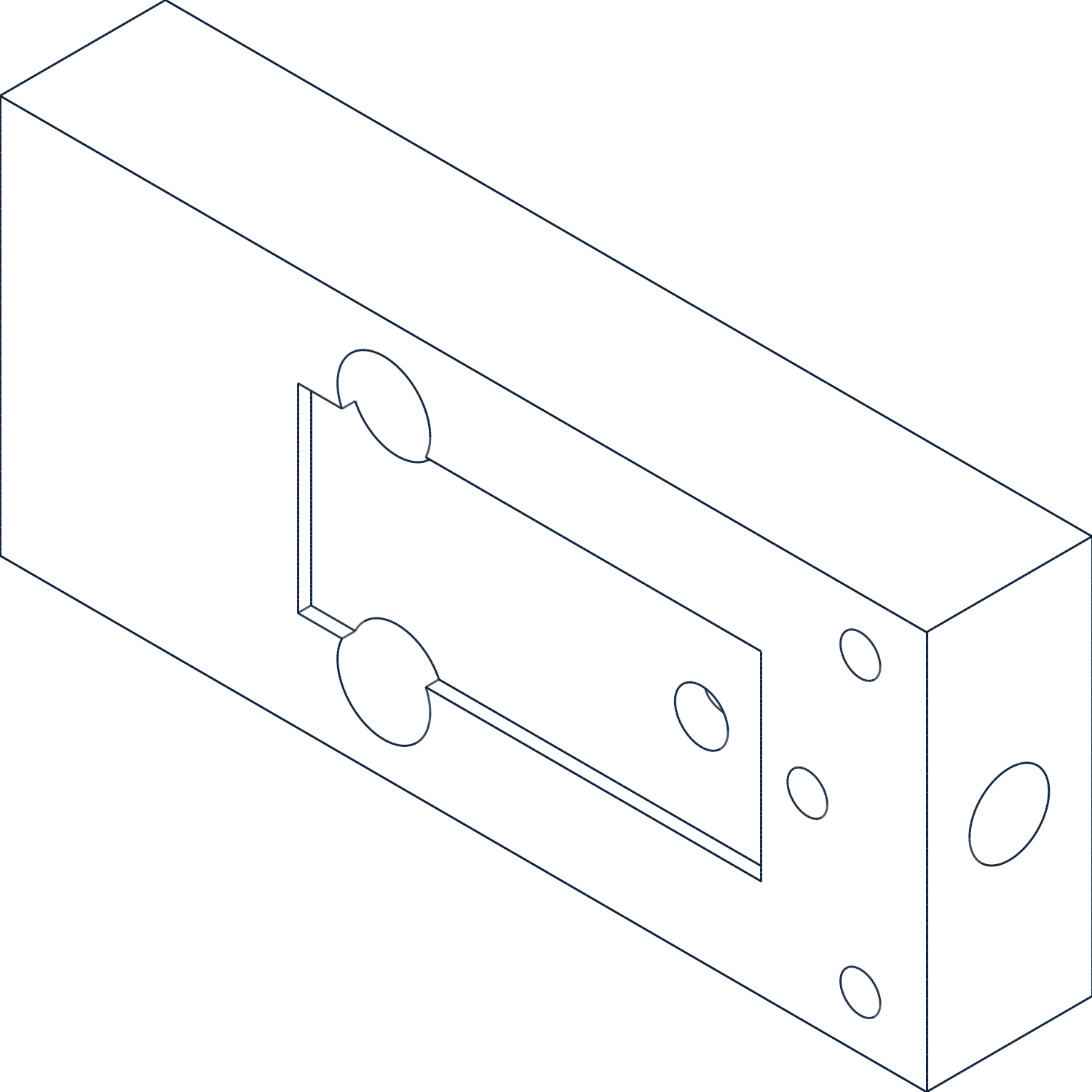
STEP: Rev A, Rev BDrawing stubs: Rev A PDF, Rev B PDFGeneration inputs: Rev A prompt, Rev B prompt, Rev A script, Rev B scriptManifest: artifact_manifest.json
Shape: rectangular machined manifold blockKey features: internal drilled galleries, threaded vacuum ports, O-ring face grooves, plugs, dowel holes, chamfersApproximate size:140 x 60 x 25 mmLikely material:Al 6082-T6, often anodizedTypical revision: move a port by8 mm, add an O-ring groove, and add a sensor port while tightening flatness on the sealing face
3. Product inserter pusher sled
Generated assets
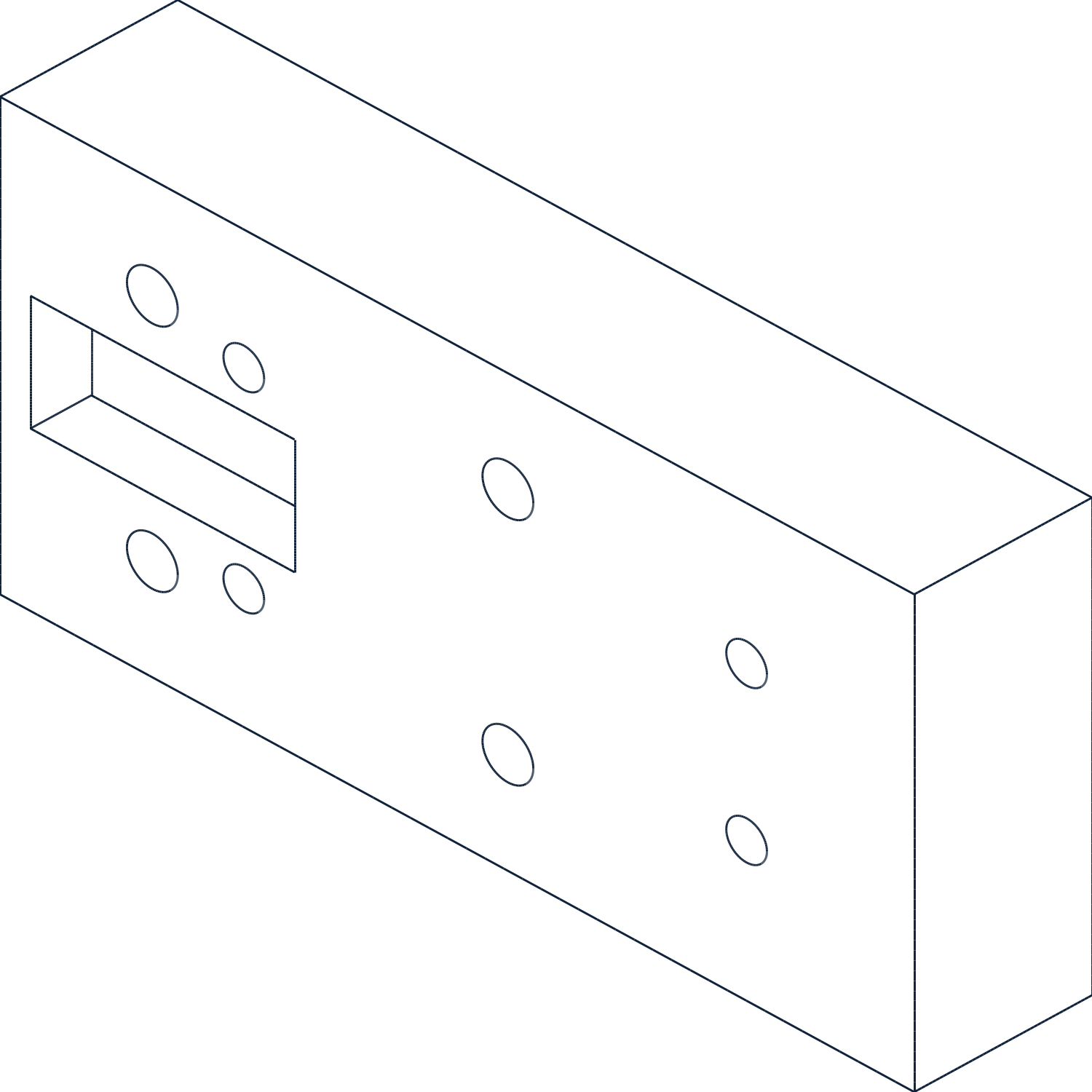
STEP: Rev A, Rev BDrawing stubs: Rev A PDF, Rev B PDFGeneration inputs: Rev A prompt, Rev B prompt, Rev A script, Rev B scriptManifest: artifact_manifest.json
Shape: compact machined block riding on linear guidesKey features: linear-bearing mounting faces, belt-clamp interface, pusher-face mounting holes, dowel pins, chamfers, grease pointsApproximate size:180 x 90 x 35 mmLikely material:Al 6082-T6or steel with hard-anodized sliding faces if aluminumTypical revision: add dowel pins, increase thickness from30to35 mm, move pusher holes by5 mm, and add a cable-relief cutout
4. Flap tucker arm
Generated assets
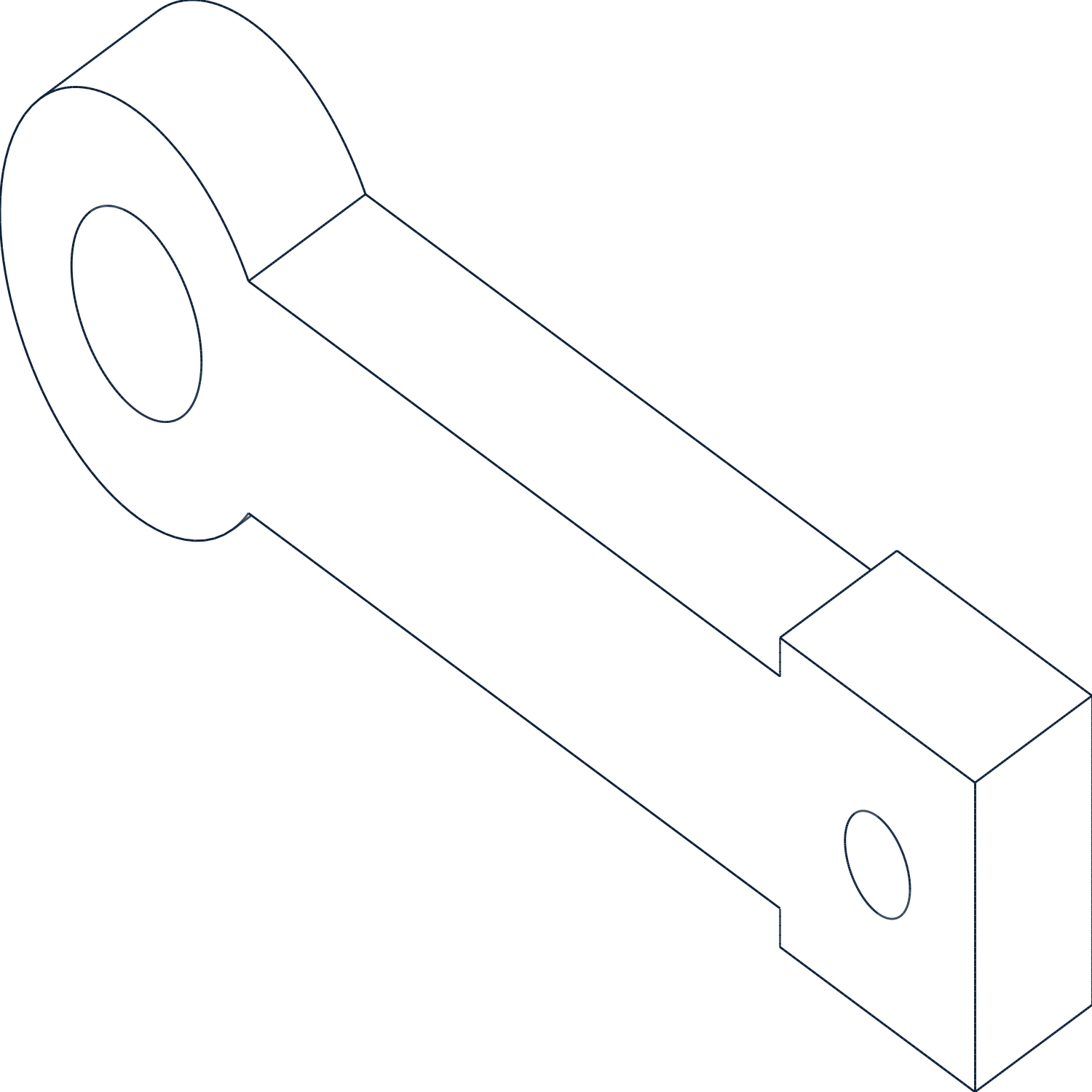
STEP: Rev A, Rev BDrawing stubs: Rev A PDF, Rev B PDFGeneration inputs: Rev A prompt, Rev B prompt, Rev A script, Rev B scriptManifest: artifact_manifest.json
Shape: lever arm with a pivot on one end and follower or stop features on the otherKey features: precision pivot bore, cam-follower stud mount, adjustable stop interface, lightening pocket, large stress-relief filletsApproximate size:160 x 45 x 18 mmLikely material:42CrMo4or stainless in product-adjacent zonesTypical revision: tighten the pivot bore, add a hardened bushing, shorten the arm by about6 mm, and increase a fillet from2to6 mm
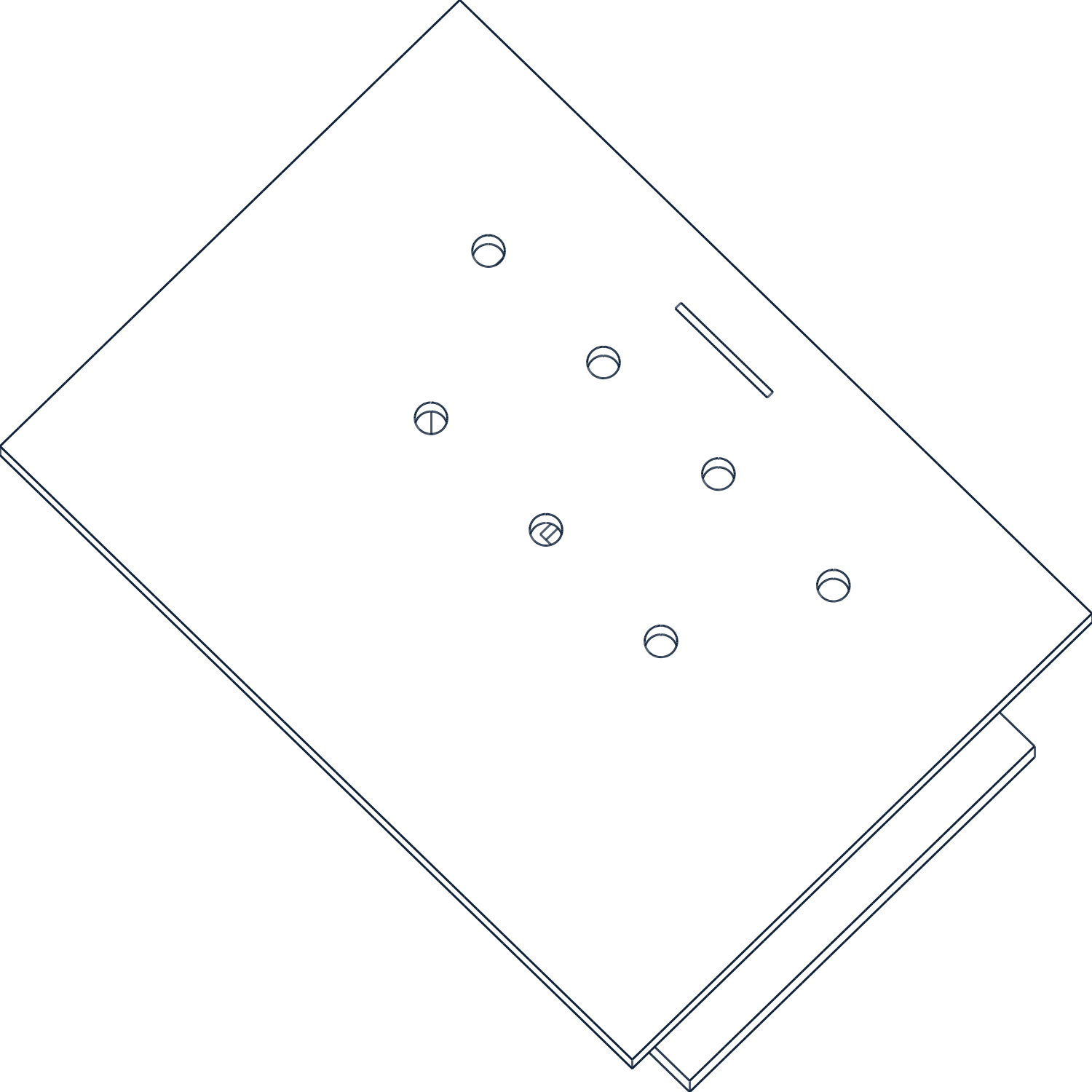
5. Hot-melt nozzle mounting bracket with heat shield
Generated assets
STEP: Rev A, Rev BDrawing stubs: Rev A PDF, Rev B PDFGeneration inputs: Rev A prompt, Rev B prompt, Rev A script, Rev B scriptManifest: artifact_manifest.json
Shape: bent sheet-metal bracket carrying a second perforated shield plateKey features: adjustment slots, formed bends, captive nuts, standoff spacers, perforation pattern, edge hemsApproximate size: bracket180 x 120 x 2 mm, shield220 x 160 x 1.5 mmLikely material: stainless steelTypical revision: shift the nozzle centerline by about3 mm, expand the slot range, add shield ventilation holes, and add locating dowel holes
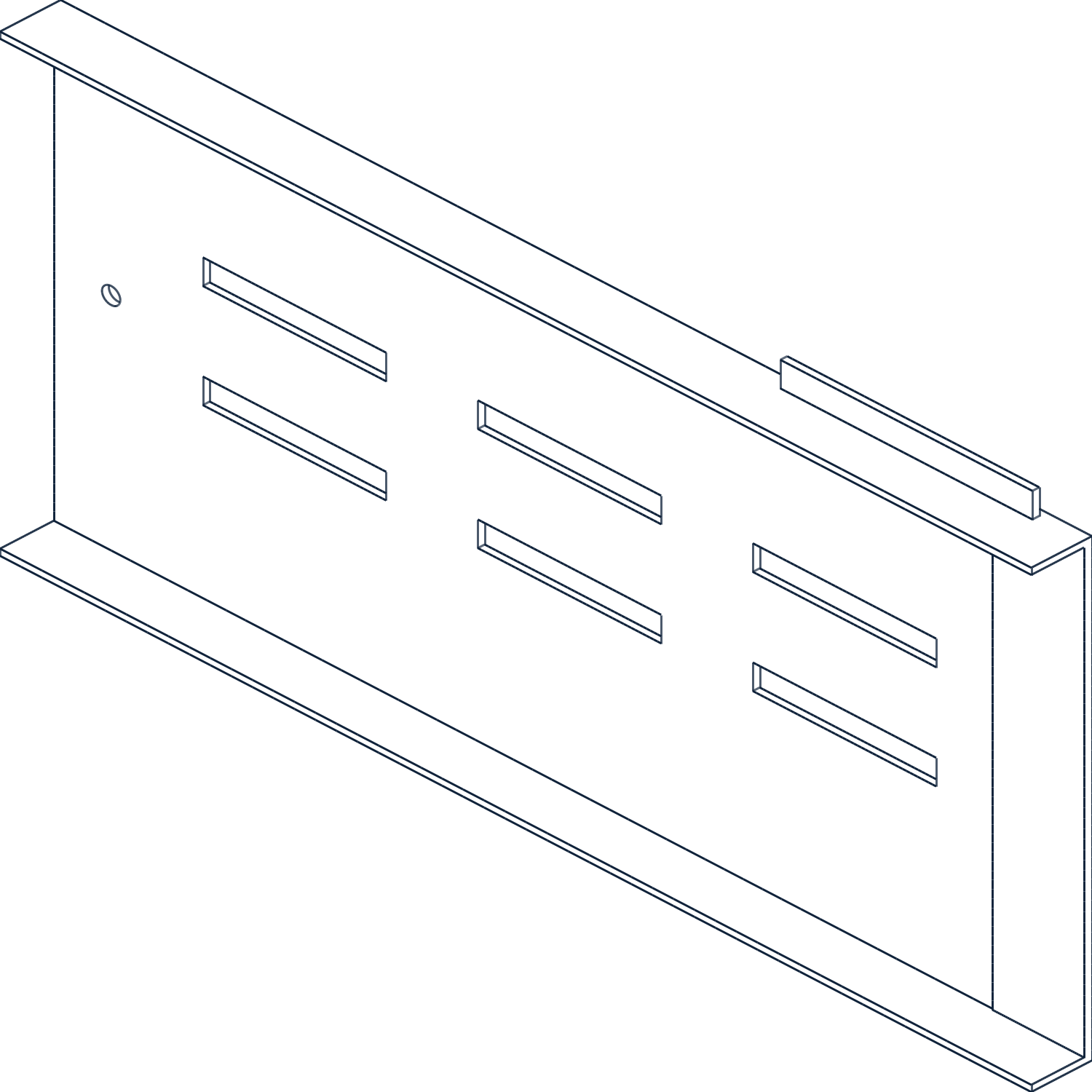
6. Adjustable carton magazine side guide plate
Generated assets
STEP: Rev A, Rev BDrawing stubs: Rev A PDF, Rev B PDFGeneration inputs: Rev A prompt, Rev B prompt, Rev A script, Rev B scriptManifest: artifact_manifest.json
Shape: long sheet-metal guide plate with bent flangesKey features: long adjustment slots, two stiffening flanges, mounting-hole array, front lead-in chamfer, hemmed or return edgeApproximate size:450 x 220 x 3 mmsheet with flange height around25 mmLikely material: stainless steelTypical revision: lengthen the slots by about20 mm, add a second slot row, and locally stiffen the flange with a welded doubler
What This Means For The Webasto Wiki
The main Webasto pilot still stands on battery and thermal documentation, not packaging machinery. So the right use of this addendum is:
- keep the public Webasto-facing wedge exactly where it already is
- use these parts only if we need generic CAD assets for internal demos or cross-company packaging narratives
- label them as representative packaging-machine components, not as Webasto product evidence
Best Use Cases For These Parts
These parts are most helpful when we need one of the following:
- a visually obvious revision-diff video
- a drawing-readiness check with rich dimensions, threads, datums, or bend notes
- a reusable packaging-machine asset bank for future pilots beyond Webasto
They are least helpful when the goal is to prove that RapidDraft understands Webasto's actual product stack. For that, the battery and thermal change-pack story remains stronger.
If We Reuse These Assets Later
If we end up using this part library in a customer-facing context, the safest framing is:
representative packaging-machine components used to demonstrate RapidDraft's revision and release-review workflow
That keeps the demo honest while still making the product visually concrete.